
Artificial intelligence is changing video game cheat development by moving some tools away from directly modifying game files or reading protected memory. Newer AI aimbots can analyze the picture shown on a monitor, recognize an opponent and generate an aiming response without accessing the game engine itself.
Machine-learning models can also make automated movements appear less mechanical, while AI coding assistants reduce the time needed to test and revise software. These changes do not make every cheat undetectable, but they force anti-cheat teams to examine player behavior, hardware signals and server data rather than relying only on known code signatures.
AI cheats can operate by watching the screen
A traditional aimbot usually reads information from game memory before moving the crosshair. A computer vision cheat can instead process captured video frames and identify character models in much the same way image-recognition software identifies objects in a photograph. To see how that commercial market presents downloadable cheats, trainers, hacks and mod menus for games such as Valorant, Fortnite, Apex Legends and GTA V, inspect the listings at thegamevault.games.
- Screen-capture software supplies live game images.
- An object-detection model identifies likely opponents.
- Software or external hardware converts detections into aiming inputs.
Because the cheat reacts to rendered images, it may leave fewer recognizable traces inside the game process.

Machine learning makes automated play look more human
Perfect accuracy can expose a basic aimbot. AI-assisted cheats can introduce variable speed, imperfect tracking and small delays intended to resemble legitimate mouse movement. The researchers behind the GAN-Aimbots study demonstrated how machine learning could generate aiming behavior modeled on human players.
[su_table responsive=”yes”]
|
Cheat type |
Main input |
Typical detection clue |
| Memory-based aimbot | Game data | Unauthorized memory access |
| Visual AI aimbot | Captured frames | Unusual aiming patterns |
| External input tool | Video and hardware | Machine-like input consistency |
[/su_table]
This does not guarantee anonymity. Every advantage must eventually appear as movement, targeting or unusually consistent performance that a game server can analyze.
Anti-cheat systems are learning to study behavior
Publishers are responding with machine-learning models of their own. Instead of searching only for prohibited programs, these systems can compare aiming speed, acceleration, timing and consistency across large numbers of matches. Call of Duty’s RICOCHET team, for example, has expanded behavior-based analysis of modified inputs used by unauthorized third-party devices.
A 2026 research system called XGuardian detected aim-assist behavior using only pitch and yaw data, the two measurements that describe where a player is aiming.
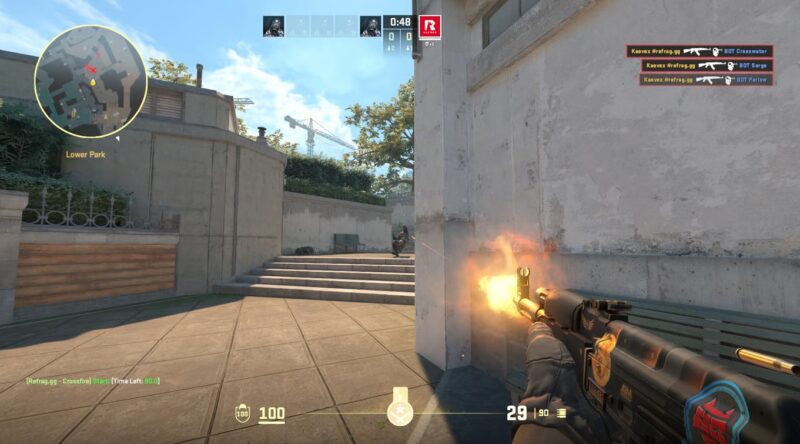
The XGuardian research evaluation reported recall of up to 90.7 percent with a 4.1 percent false-positive rate. These are experimental results, not proof that the system is deployed in a commercial game. Other researchers have tested visual defenses that subtly alter rendered images so computer vision models struggle to recognize players. The peer-reviewed Invisibility Cloak project demonstrated this approach in Counter-Strike 2 and CrossFire.
Cheat development is becoming an AI arms race
AI video game cheats are unlikely to replace every conventional hack. Reading memory can still provide information that a camera cannot see, while visual models may fail when lighting, character skins or graphical effects change.
Their importance comes from creating another route around client-side protection. Developers now have to combine program scanning, secure hardware requirements, server telemetry, player reports and behavioral analysis.
Players should treat claims of “undetectable” AI cheats as marketing, not fact. Using one can still produce an account or hardware ban, and any installer that asks users to disable antivirus software or operating-system protections should be treated as a serious security risk.
Frequently asked questions
1. Can AI cheats work on consoles?
Some can process console video on a separate computer and return commands through input hardware. Platform restrictions make this more complicated, but not impossible.
2. Can browser games face AI-assisted cheating?
Yes. Competitive browser-based multiplayer games can be targeted when software can capture the screen or automate keyboard and mouse input.
3. Do player reports still help?
Reports can flag suspicious accounts for closer analysis, particularly when several players independently notice the same behavior. Publishers rarely reveal the exact thresholds used.
4. Are single-player trainers treated like multiplayer cheats?
The rules differ by game. A single-player modification may be tolerated, while using the same tool in an online mode can violate the publisher’s terms and trigger enforcement.